


On Wednesday, October 4, 2023, I was at a friend’s wedding in Caesarea. After the ceremony, my wife and I sat at a table with friends and couples.
One of our friends and her fiancé, Benji Trakeniski, sat next to us. They were so excited for their own wedding. You could see his smile when Benji talked about it. What a smile he had.
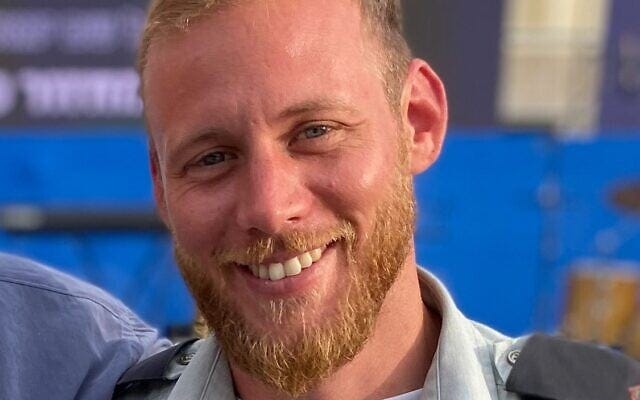
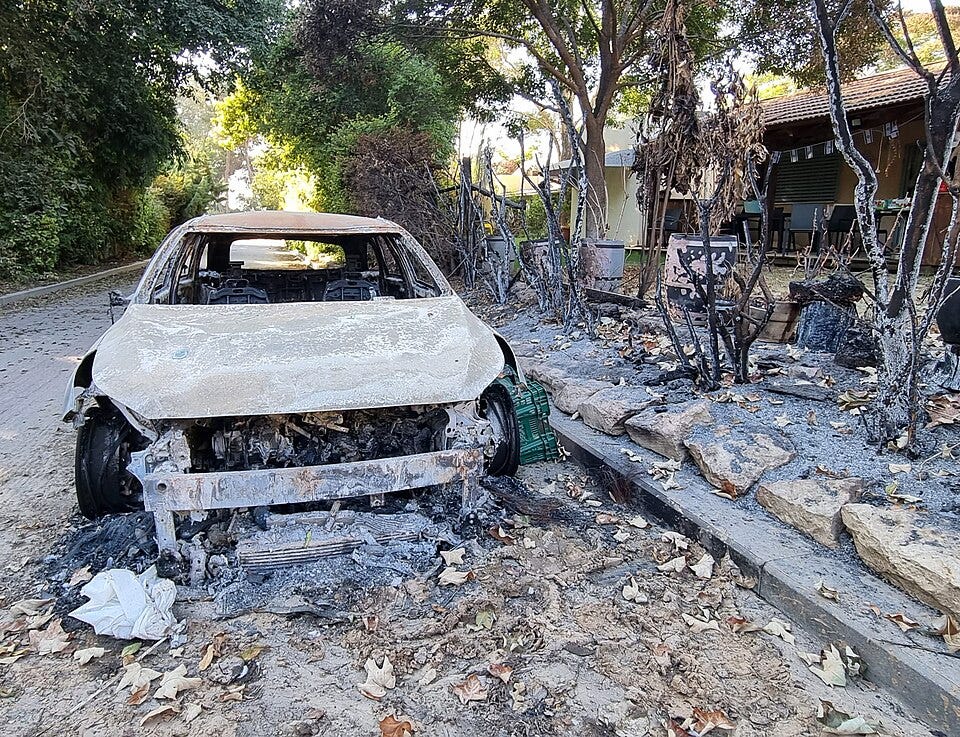
Benji was a career soldier, a major in the IDF’s 7th Brigade. Three days after we sat together in Caesarea, he woke up, kissed his fiancée goodbye, and rushed to Kibbutz Be’eri, responding to news of an attack there.
Benji helped save dozens of people that day, but he never came back. There was no wedding. The next week, at his funeral, I heard his fiancée read from the vows she had written for their wedding.
I’m telling you this story because it comes to mind every October 7.
Everyone in Israel is at most a couple of degrees connected to the loss of that day. For me, the connection is Benji. I saw him. I spoke to him 72 hours before.
The officer who fought beside him told Ynet that Benji’s weapon jammed, and that Benji turned to pull the wounded to safety while he kept firing. He also said they went in on their own, without orders, and that he had no body armor or night vision. What happened to Benji after that, we still don’t know exactly. His family says he fought for hours and fell around nine that night. He was listed as missing for three days. How much longer before anyone found him?
We deserve people in charge who will do everything they can to find answers—to fill in Benji’s story and the hundreds of others like his.
In a normal country, the government would establish a state commission of inquiry. The Israeli government has not established one. The families of those murdered by Hamas and Islamic Jihad are forced to mark yet another anniversary of their loved ones’ deaths—another anniversary of the largest massacre of Jews since the Holocaust—with too many open wounds.
At Benji’s funeral, an ambulance pulled up. The officer who reported that Benji’s gun had jammed was badly wounded himself. But he showed up to the funeral, on the first day of his rehabilitation, to speak about Benji’s heroism. For hundreds of families, these fleeting anecdotes are all that they have.
We are left playing guessing games. We turn to secondary sources to connect the dots. Reporting by intrepid Israeli journalists. Books like Amos Harel’s excellent 6:29 or Brett McGurk’s new Brink, a lead American negotiator’s account of the hostage talks.
My son was three months old on October 7, and we have had another since. Benji and his fiancée should have been married in April 2024.
Instead, Benji isn’t here, and we’re stuck with painful questions. They go beyond the precise circumstances of his death to affairs of state: Why were the warnings ignored? Reporting in recent weeks says Egypt’s intelligence chief flew to Israel a week and a half before October 7 to raise the alarm, and that the UAE’s president also warned Netanyahu.
Netanyahu’s office denies it. The warnings, officials say, did not specify when or how large an attack would be.
There are questions closer to the ground, too. The IDF’s own investigation of Be’eri found that most of the kibbutz civilian emergency squad’s weapons were in the armory when the attack began. The same investigation concluded that the army failed in its mission to protect the kibbutz. Amit Mann, a 22-year-old paramedic who lived there, was trapped in the clinic with the wounded for hours before Hamas broke in and murdered her.
After the investigation came out, Benji’s sister, Sharon, wrote that people should “notice the difference between the systemic failure and the personal heroism.” The failure, she said, was institutional, and without fighters like Benji the toll would have been far worse. She couldn’t have been more right.
Here again, we could benefit from a commission of inquiry. The government says a commission must wait until the war is over.
As a sop to angry families, the government has advanced its own politically appointed panel in the meantime. A state commission’s members would be chosen by the president of the Supreme Court, not by the people whose decisions it will examine. The families are asking for a commission that can ask this government hard questions.
I have spoken a lot about the Israeli government, so let me be clear on two counts. First, Hamas is evil, and its leaders and fighters had agency and chose to commit unspeakable crimes. Next, the hostage crisis was genuinely complex, with Israel’s leaders placed in an impossible position with no easy out—punt on a deal, and risk the lives of the hostages, or concede to Hamas’s demands, save the hostages, and essentially give Hamas permission to try this all again.
Still, the government’s opacity is telling. On October 5, 2026, the government held its official memorial ceremony. Today, on October 7, the families hold theirs. They called a minute of silence at 6:29, at hundreds of sites across the country. The two ceremonies pull apart for one reason: the government has not owned up to what happened or investigated it. We should be able to mourn, but instead we’re left to wonder.
In memory of Maj. Benji Trakeniski, and of all those we have lost since October 7, 2023.
We will never forget.
A deeply moving piece, Eli. The distinction between systemic failure and personal heroism is essential. May Benji’s memory be a blessing, and may his family and all the families of October 7 receive the answers they deserve.