


Let’s settle the “who started it” debate, because the record is now fairly clear.
On February 23, Netanyahu called Trump and told him that Khamenei and his top advisers were set to meet at a single location in Tehran on Saturday morning. Trump directed the CIA to verify the intelligence. By Thursday it had — Khamenei, senior IRGC commanders, the whole leadership in one place. That same day, Kushner and Witkoff called from Geneva: the nuclear talks were going nowhere. Eleven hours later, operations Epic Fury and Roaring Lion were underway.
This was not Israel going rogue and America scrambling to catch up. One US official put it plainly to Axios: “One side of the house was negotiating, and the other side of the house was doing joint military planning.” Trump was running both tracks simultaneously, and he made the call.
Which is why what Rubio said on Monday was so damaging — not because it revealed some hidden truth, but because of how carelessly he said it.
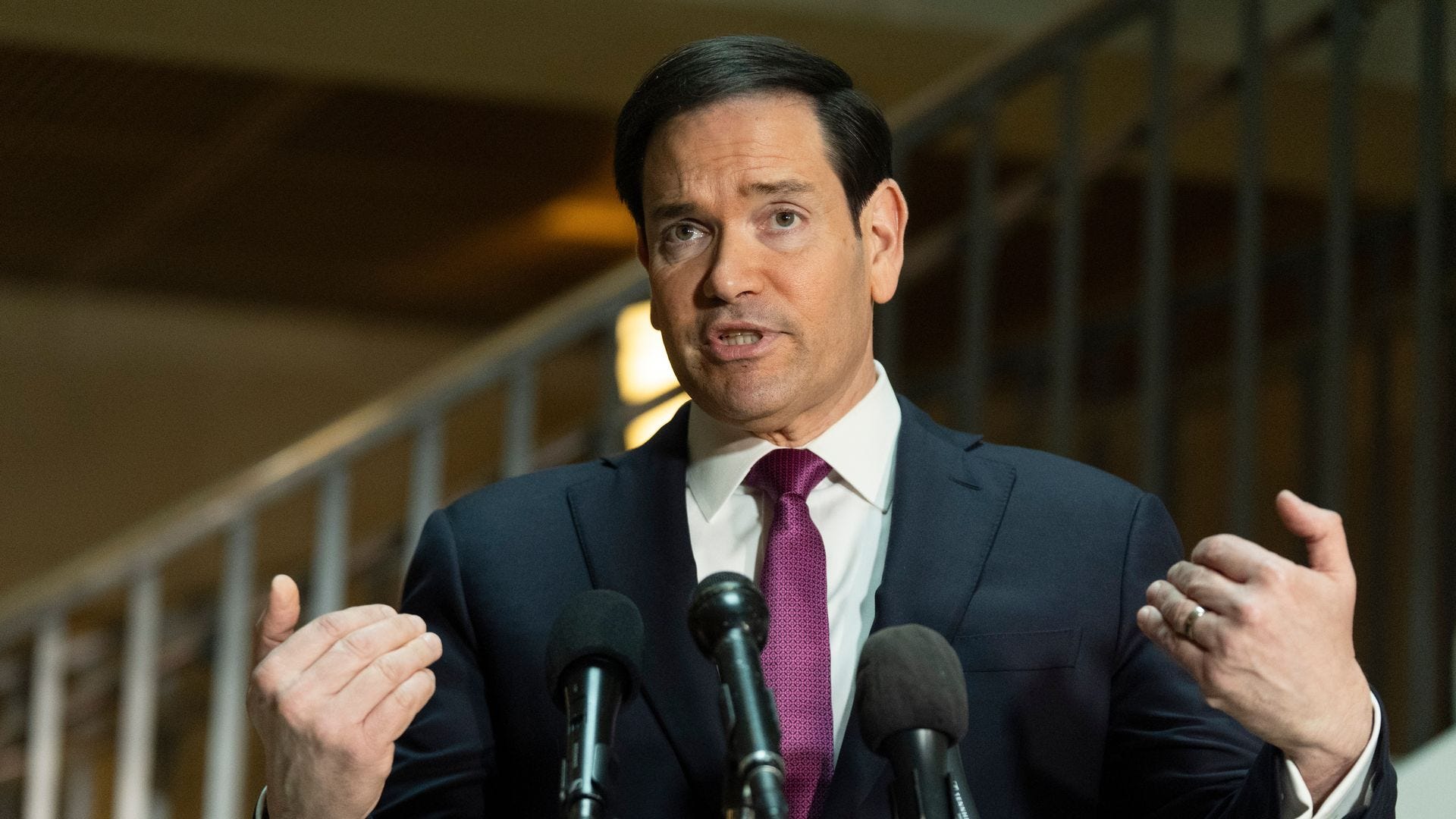
Rubio told reporters on Capitol Hill that “we knew that there was going to be an Israeli action” and that the US joined the strikes to avoid suffering higher casualties from Iranian retaliation. The implication landed immediately: Israel decided, America followed. Trump tried to clean it up the next day in the Oval Office — “No, I might have forced their hand” — and Netanyahu went on Fox to say Trump “can’t be dragged” into anything.
To be fair to Rubio, he tried to set the record straight. When a reporter told him the next day “yesterday, you said that Israel wanted to strike Iran, that’s why we got involved,” Rubio pushed back directly: “No, your statement is false. I said this had to happen anyway. Was a question of timing, not question of intent.” He’s right that that’s what he said. The problem is the original clip had already traveled further than the correction ever would.
Here’s the context Rubio didn’t mention: the original plan called for strikes in late March or early April, giving the administration weeks to build the public case for war. Netanyahu pushed to move faster. The accelerated timeline caught the White House flat-footed. As one US official acknowledged to Axios: “We didn’t make the case in advance as well as we could have because the opportunity came on us so fast.” Rubio walked into a Capitol hallway briefing and filled that vacuum — badly.
On the MAGA right, Matt Walsh wrote: “So he’s flat out telling us that we’re in a war with Iran because Israel forced our hand. This is basically the worst possible thing he could have said.” Tucker Carlson and Megyn Kelly said Israel is dragging America into a damaging war. On the progressive left, Rep. Sara Jacobs said Rubio “said the quiet part out loud: this is an unnecessary war of choice. Israel forced our hand.” Sen. Ruben Gallego asked: “So Netanyahu now decides when we go to war? So much for America First?”
The left and the MAGA right rarely agree on anything. They agree on this.
That’s the problem. Rubio handed the same talking point to the isolationist MAGA right and the progressive left simultaneously. The “Israel dragged us in” narrative now has even more oxygen on both sides of the aisle — and once it takes hold, a presidential correction in the Oval Office doesn’t fully extinguish it.
None of this changes the strategic logic of what happened. This was jointly planned, jointly executed, and both countries had clear reasons to act. But in Washington, perception has a way of becoming reality. If American casualties mount — and they may — the question of “who got us into this?” will grow louder. Rubio gave that question a very easy answer.
Israel has enough critics in Washington already. It doesn’t need its closest ally’s Secretary of State accidentally handing ammunition to both ends of the political spectrum because the communications strategy didn’t keep pace with the military one.
Trump tried to fix it. But you can’t unring a bell.