Thank you, everyone, for subscribing. We have now reached over 100 paid subscribers. It means a lot. More importantly, thank you to the heroes of flydubai 1073, whose heroism saved the lives of 174 people. I’ll post my thoughts on that here tomorrow. In the meantime, here’s this week’s Notes from Tel Aviv.
Chag Sameach!
Last weekend I took my son to his first Israeli soccer match.
Now, in North America, it’s normal to take young kids to a sporting event. In Israel, it is a different ballgame, literally. Israeli soccer culture is usually not a family affair.
Ultras (the most intense fans and hooligans), flares, rivalries, and curse words. Soccer is more an identity than a game to many Israelis, and it cuts to the core of people’s politics and personal belief systems.
If you’ve read The Middle Ground consistently, you’ll know that I frequently bring up soccer. There’s no hiding that I’m a big fan. Naturally, I’m trying to indoctrinate my son at the earliest possible opportunity.
As a good husband, I would always float the idea to my wife.
“Our son is now three, maybe I can take him to a game?” I asked.
She answered, “What time is it at?”
The answer was 8 pm. I knew then I’d lose my case. It was probably for the better. That was the game between Hapoel Tel Aviv and Beitar Jerusalem, one of the fiercest rivalries in Israeli football, between teams that represent the left and the far right, respectively.
But then I looked again at the schedule and found my moment: a 3 pm Friday afternoon game, just before Shabbat. This matchup was Hapoel Tel Aviv versus Hapoel Petah Tikvah, so there wasn’t likely to be a civil war in the stands. It was perfect.
I asked, and this time, my wife agreed.
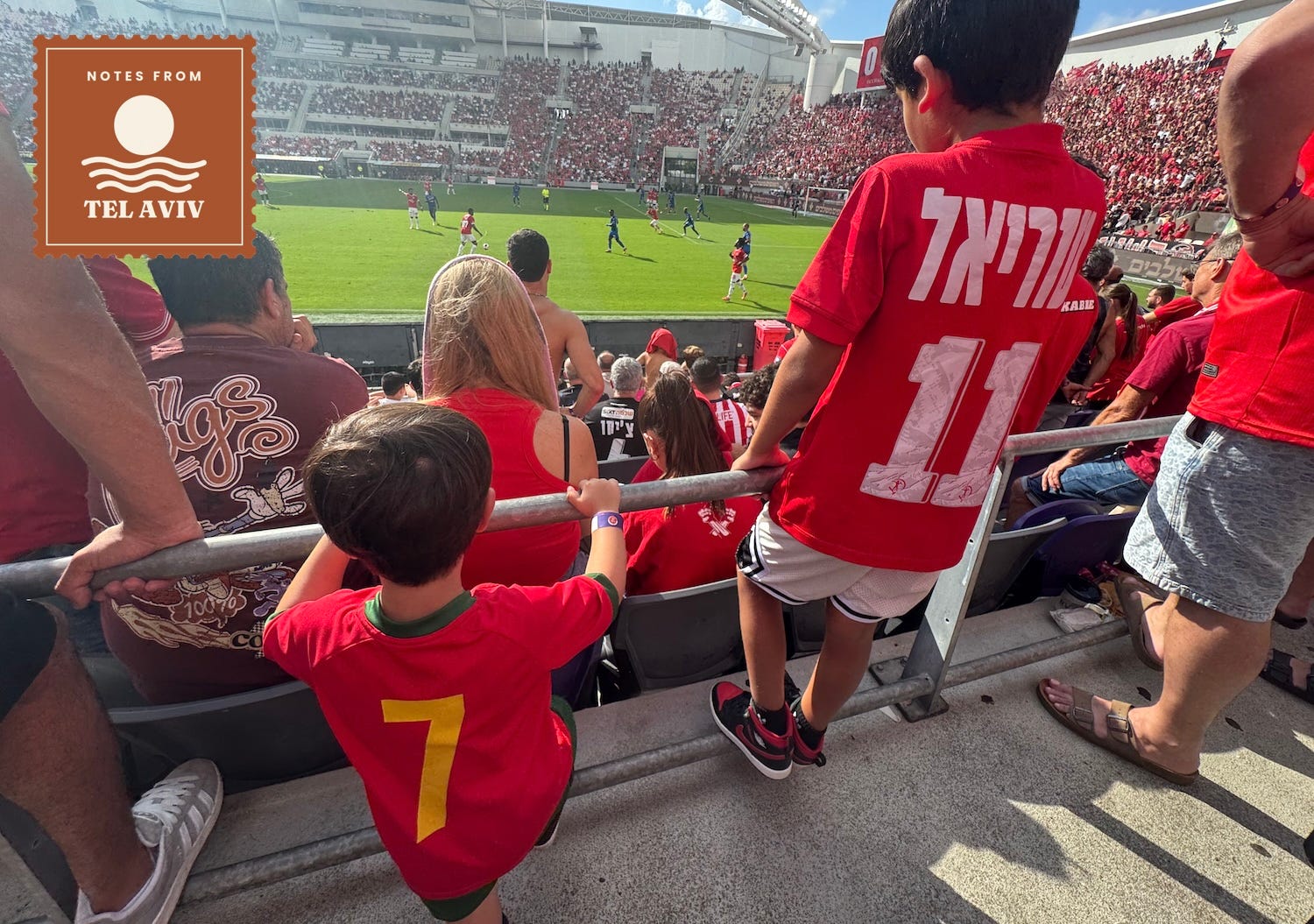
This was it. We went to the game, and my cousins were there too, which made my son Eitan even more comfortable.
The game was rather uneventful; Hapoel Tel Aviv were comfortably ahead, and Eitan was having a blast.
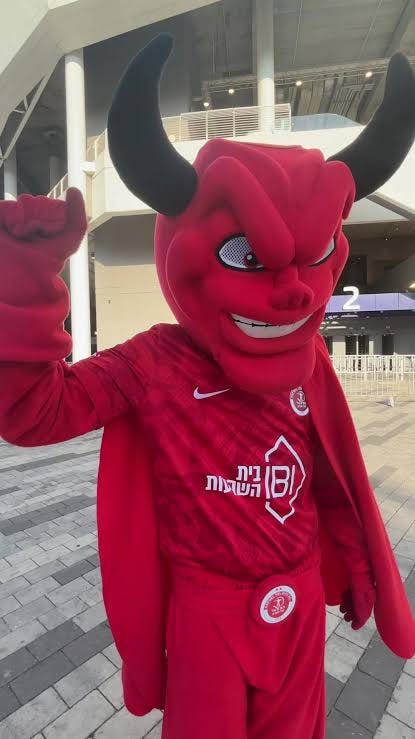
Until halftime, that was, when he saw Hapoel Tel Aviv’s mascot: the devil. Yes, really.