


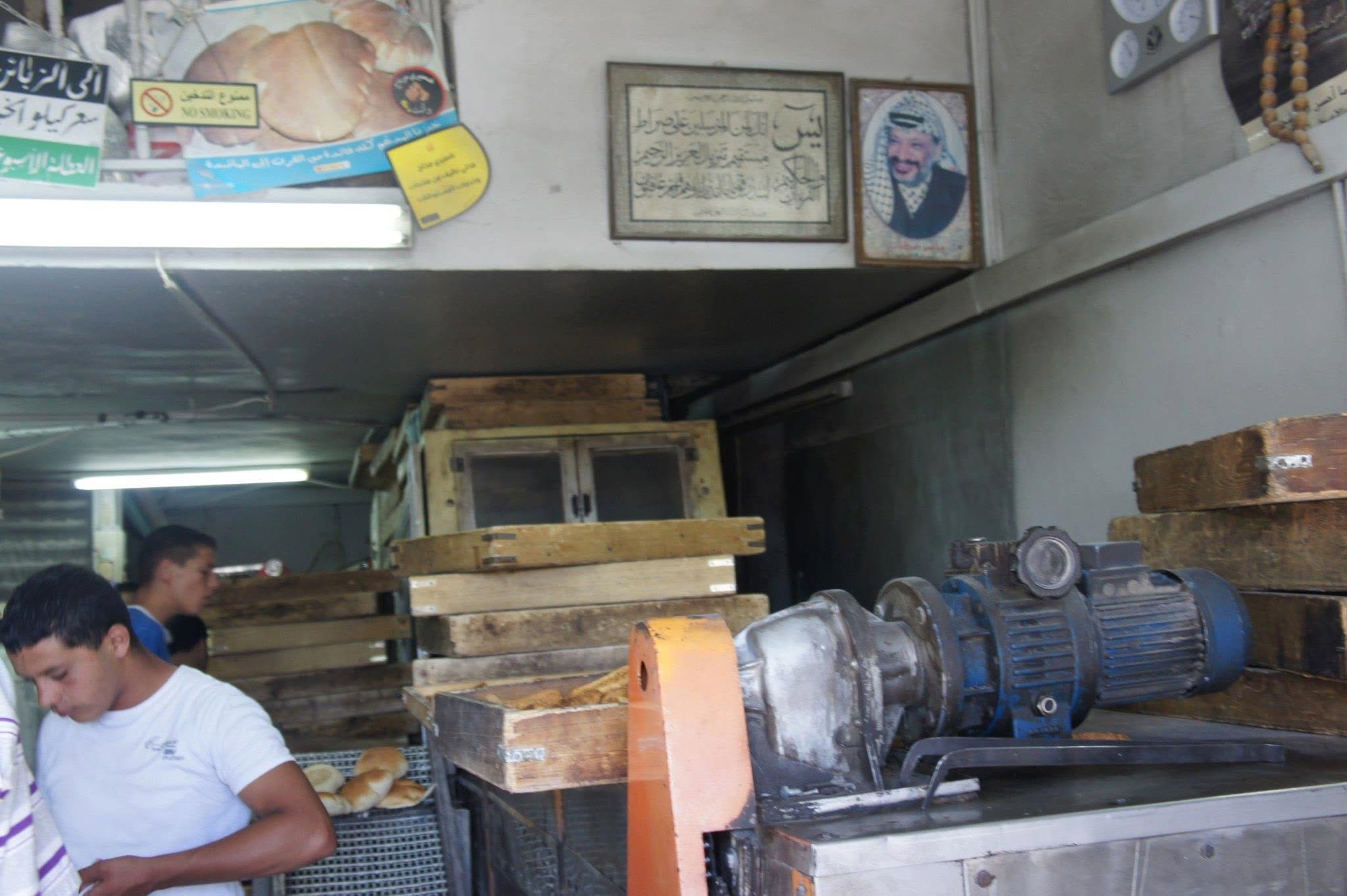
In 2012, I went to Ramallah with a friend. I was nervous. I wore a shirt that said Canada and told myself I’d forget my Hebrew and only speak English. He had a friend there from Hebrew University. For years it had felt like somewhere miles away, but as we boarded the bus in East Jerusalem adjacent to the Old City, I realized how close it was.
Overall, we had a great time, 10 shekels for a shawarma in a lafa for a college student was more than I could ask for, and the knafe was delicious. The shawarma keeper asked me where I was from; I said Canada! He told me he had family in Montreal; I wasn’t surprised. The people were also very nice, and of course they thought I was Canadian. Ramallah is the PA jewel in the West Bank, one of the least radical Palestinian towns. And still I saw it all: tributes to martyrs, portraits of Arafat everywhere, the rare one of Abu Mazen, and multiple times at magazine and book shops, copies of Mein Kampf in Arabic. Now I know about the Mufti’s relationship with Hitler, and how prevalent Nazi propaganda is in the Arab world, but I was still surprised.
Which is why what Mohammed Dajani did two years later was incredible. He was the founding director of the American Studies Institute at Al-Quds University. In 2014, he took 30 students to Auschwitz-Birkenau. This was the first organized visit of its kind and, moreover, a joint program with Ben-Gurion University and Friedrich Schiller University. Two Jewish survivors accompanied them. Make no mistake, Dajani was no Zionist, but he simply thought that Palestinians needed to understand the role the Holocaust plays in Israeli consciousness. I believe these were the kind of steps needed to bring Palestinians closer to understanding Israelis.
Dajani was denounced as a traitor and a Zionist collaborator. He was expelled from the faculty union. He resigned from his post in May. The following January, after death threats, his car was burned outside his home. All this for taking 30 Palestinian students to Auschwitz.
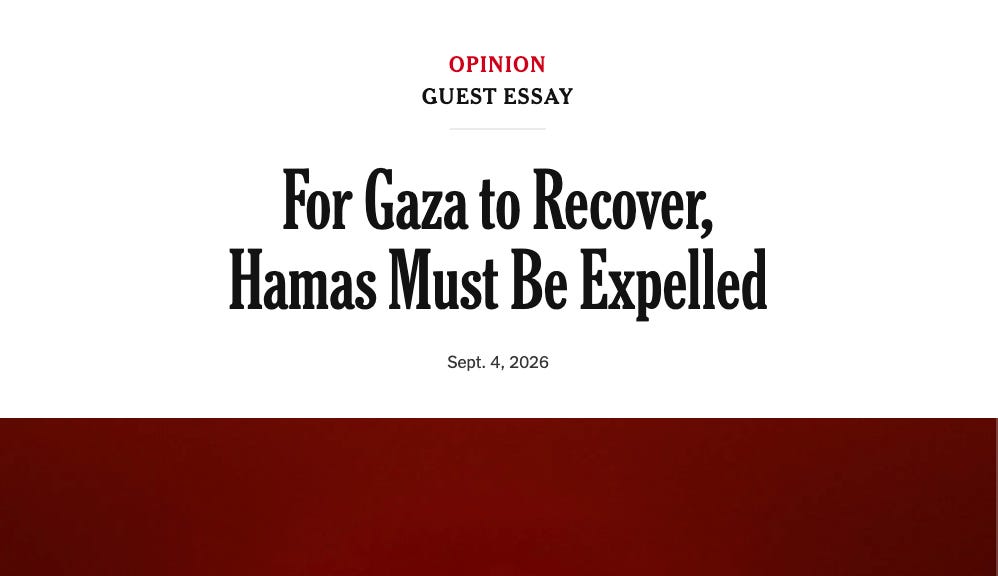
This week, another Palestinian, Ahmed Fouad Alkhatib, was accused of being a Zionist collaborator after he wrote a powerful guest essay in the New York Times last Friday, “For Gaza to Recover, Hamas Must Be Expelled.” Alkhatib is a senior fellow at the Atlantic Council and the author of Hamas and Its Two Million Hostages. In the essay, he writes that Israel’s bombardment killed much of his family. The attacks against him included fabricated claims about his identity and accusations that he is paid by Israel. A Palestinian-American poet with a large following wrote that he has blood on his hands, that he is a Zionist collaborator and a traitor to humanity, and that Palestinians hate him.
The blood refers to Anas al-Sharif. In February 2025, Alkhatib criticized al-Sharif and his crew for their conduct at the Netzarim corridor. That August, Israel killed him. Some pro-Palestinian activists accuse Alkhatib of being responsible.
Zionist collaborator. Two unrelated acts, twelve years apart.
I accept that for many Palestinians, Alkhatib’s focus on Hamas overshadows the damage Israel has done to Gaza during this war. A war that started with Hamas’s brutal massacre of 1,200 people on October 7, 2023. I also don’t like his word Nazification, and I think the parallel is unhelpful. But instead of viewing his critique as part of the picture, “pro-Palestinian” advocates are charging Alkhatib with collaboration.
The response to Alkhatib is more than anything detrimental to the Palestinian cause. Refusing to listen to a Palestinian who puts blame on Hamas strengthens the claim that Palestinians lack agency and that Palestinians will be unwilling to accept any state on any borders.
So in the end, what is punished is the act of treating the other side as real. Dajani asked Palestinians to take Jewish suffering seriously. Alkhatib asks them to take Palestinian responsibility seriously. Both were called collaborators for it.
This is yet another episode of this sad reality. Dajani was destroyed by Palestinian institutions in Jerusalem. His union kicked him out, his university let him go, his car was burned. Alkhatib has faced threats, harassment, and online abuse. The machines are different, but the words and the reflex are the same, and only one of them costs the enforcer nothing.
Alkhatib has lost much of his family in Gaza. The people calling him a collaborator have, for the most part, lost nothing, and they are the ones deciding who counts. He answered that himself, and it matters that he is the one who said it: nobody holds a monopoly on what counts as a legitimate Palestinian viewpoint.
I follow hundreds of Gazans with large followings in Arabic on FB, and nowadays, his oped is very much representative of their views on Hamas. They are desperate for Hamas to disarm and get out. Unfortunately their voices don’t reach the Western discourse and it is very dangerous for them to attempt it, and so diaspora activists and media continue to speak over and for them. Tragic
There is something especially bleak about the word “collaborator” in both of these stories. It turns the willingness to see the other side—or to acknowledge responsibility within one’s own—into an act of betrayal.
Dajani did not ask Palestinians to become Zionists. Alkhatib is not asking them to stop grieving what has happened in Gaza. Both simply insist that another truth must be allowed into the room.
And perhaps that is why these voices matter so much. Any eventual coexistence will require people capable of holding more than one truth at a time. If those are precisely the people each community drives out, we should not be surprised when all that remains are the absolutists.