


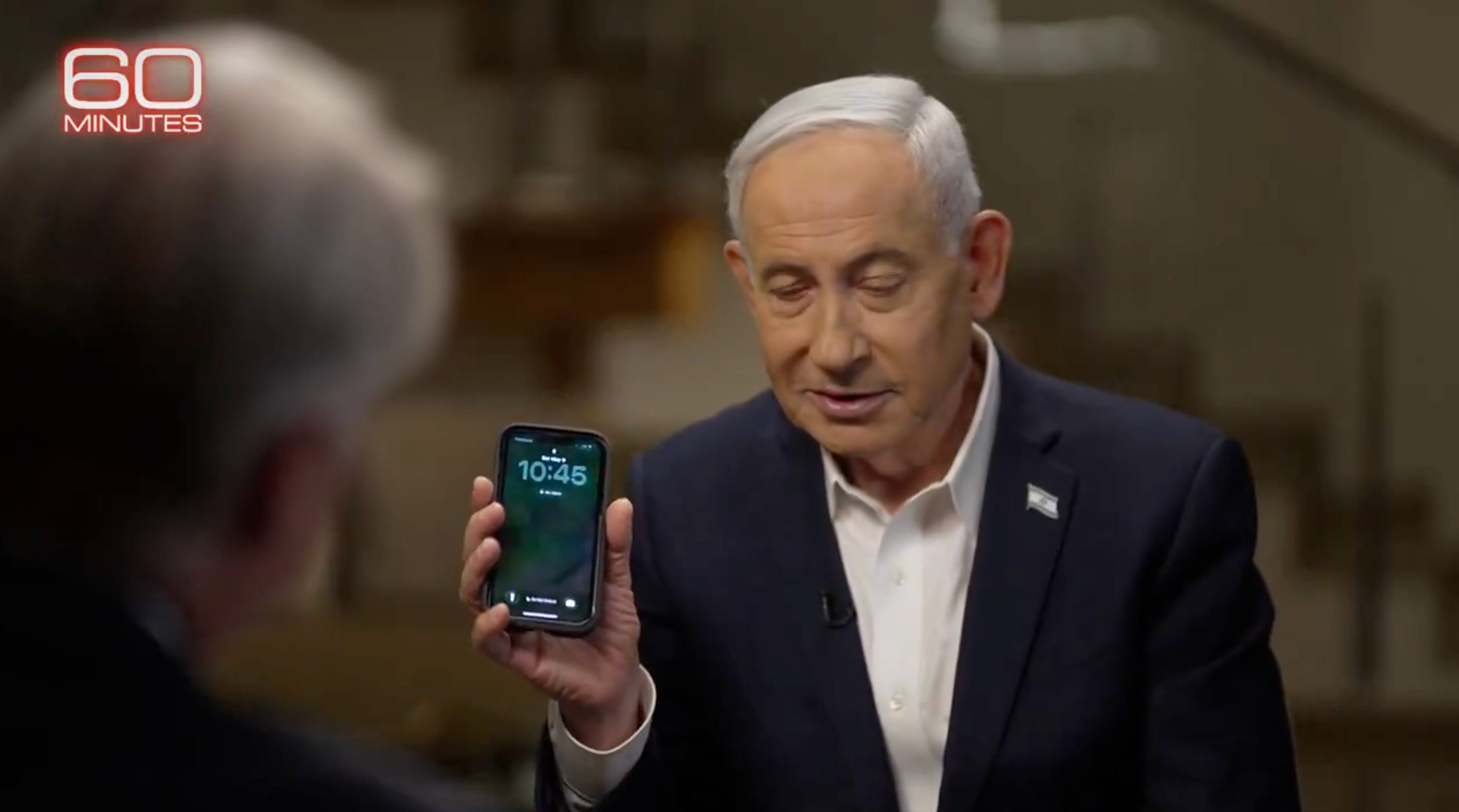
Benjamin Netanyahu went on 60 Minutes and explained that Israel's image problem is social media's fault. "We have not done well in the propaganda war," he said.
I almost never open TikTok. This week I opened it once, and the first thing the algorithm served me was Ben Gvir’s noose cake — the National Security Minister of Israel, at his 50th birthday party, with a cake topped with a golden noose and the inscription “sometimes dreams come true.” A reference to the death penalty law for West Bank Palestinians he’d spent years championing that recently passed in a Knesset vote.
In his first American broadcast interview since the Iran war began, responding to a Pew survey showing 60 percent of Americans now hold an unfavorable view of Israel — a trend I’ve written about here before — he had a name for it. The “eighth front,” he called it. As real a battlefield, in his telling, as Lebanon, as Iran, as Gaza.

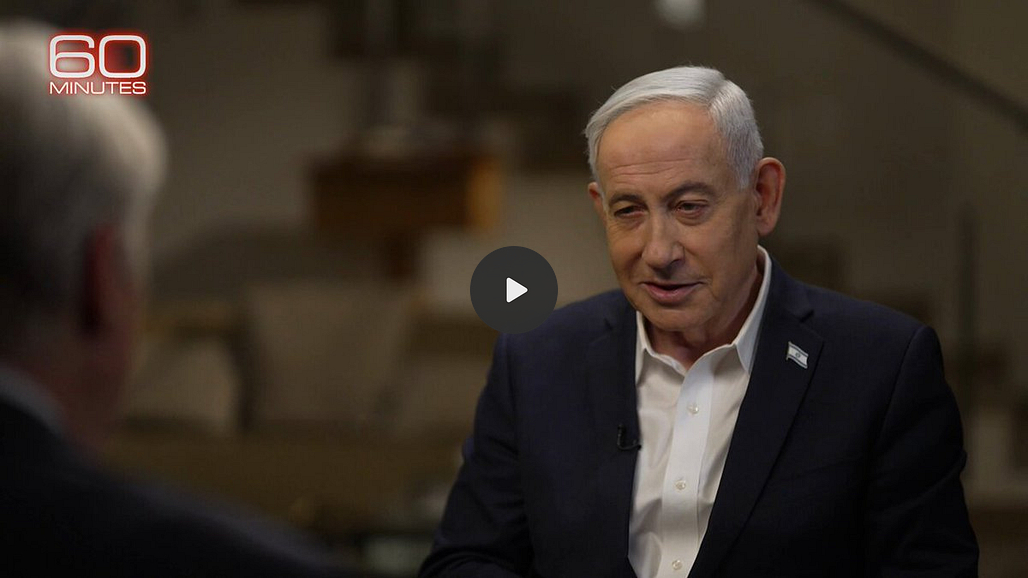
It’s a compelling argument, and Netanyahu has made calls in this war I would defend. The social media argument isn’t one of them.
Name social media as the problem and you’ve already written the solution: better messaging, better distribution, a more fluent algorithm. You don’t change what Israel does. You change how it’s packaged. And the people making the decisions that produced the problem answer for none of it.
There is a partial truth in Netanyahu’s argument. Social media has been weaponized against Israel. Its detractors have powerful mechanisms for spreading decontextualized clips and outright fabrications with global reach and viral velocity. The platform doesn’t reward nuance; complexity doesn’t travel, and what thrives is whatever is most extreme — none of that is invented.
Two years of war footage from Gaza — some real, some decontextualized, some fabricated — is the primary content driving those numbers. The platform doesn’t distinguish. It amplifies whatever travels. When Israeli soldiers post footage of themselves desecrating religious statues in southern Lebanon, the images circle the globe before the IDF investigation is opened. This isn’t Netanyahu-specific — it reflects a real breakdown in soldier discipline and an institution that hasn’t adapted to the reality that every soldier has a camera and a feed. The content exists because the acts exist. The platform just makes sure the world sees them.
Then there’s what is Netanyahu-specific. He once promised Ben Gvir would have no place in his government. That promise lasted until he needed Ben Gvir’s seats to stay in power and navigate the corruption charges against him. The cost of that transaction is now visible to anyone paying attention: a National Security Minister celebrating his 50th birthday with a noose cake, inscribed “sometimes dreams come true,” while days later his AI-generated TikTok declared the same dream to millions. Netanyahu didn’t bake the cake. He put the man in the room, knowing full well what he would do.
Ben Gvir and Bezalel Smotrich are not at the margins. They are men whose stated ambitions Netanyahu chose to govern with and has kept in place because his political survival requires them. Smotrich has called for population transfer in terms no previous Israeli finance minister would have used in public. His vision of Greater Israel leaves no room for a Palestinian state. He has explicitly called for Israeli borders to extend to the Litani River in Lebanon and into Syria. To say policy is the problem is to name the policies responsible. Netanyahu cannot name them without losing his government. The eighth front is a deflection of responsibility. Without it, the accountability has nowhere to go but back to him.
As Netanyahu was preparing to tell 60 Minutes that social media is Israel’s image problem, his own party was deploying AI-generated videos depicting his political rivals as Arab lawmakers — using the same platforms, the same tools, the same viral logic he now decries. He has mastered the algorithm and uses it in every campaign, including this one to delegitimize the role of Israel’s Arab citizens in any future government. The eighth front isn’t a problem Netanyahu discovered. It’s a weapon he built. He just doesn’t like how it’s being aimed back.
Blaming the platform forecloses the argument that most needs to be made: that the problem is real, that it’s addressable, and that fixing it requires accountability. The problem is the decisions he’s made, the coalition he built, the ministers he kept, and the content they generate daily. That gets harder to say every time the prime minister goes on television and tells the world the problem is the phone in its hand.
You are naming things here that need to be said. And I want to add to it.
I grew up around what I can only describe as "casual antisemitism". A kid wasn't allowed to play with me because I was a Jew. People would make matter of fact comments about Jews being manipulative or money grubbing, matter of factly. But I never feared for my safety. And by the time I was an adult, it had mostly disappeared from "things that are acceptable to say out loud."
After October 7th, I have felt fear for the safety of Jews in the diaspora. I find myself wondering whether there's any safe place left outside of Israel.
Netanyahu, Ben Gvir, and Smotrich didn't just damage Israel's image. They handed the world's antisemites a gift, wrapped in an Israeli flag.
No one should be holding all Israelis, let alone diaspora Jews accountable for the actions of Israel's government, but yet, I see all of the ways in which Netanyahu has made all of us less safe.
Even though we didn't make those choices, we pay for them anyway because of the content he built.