


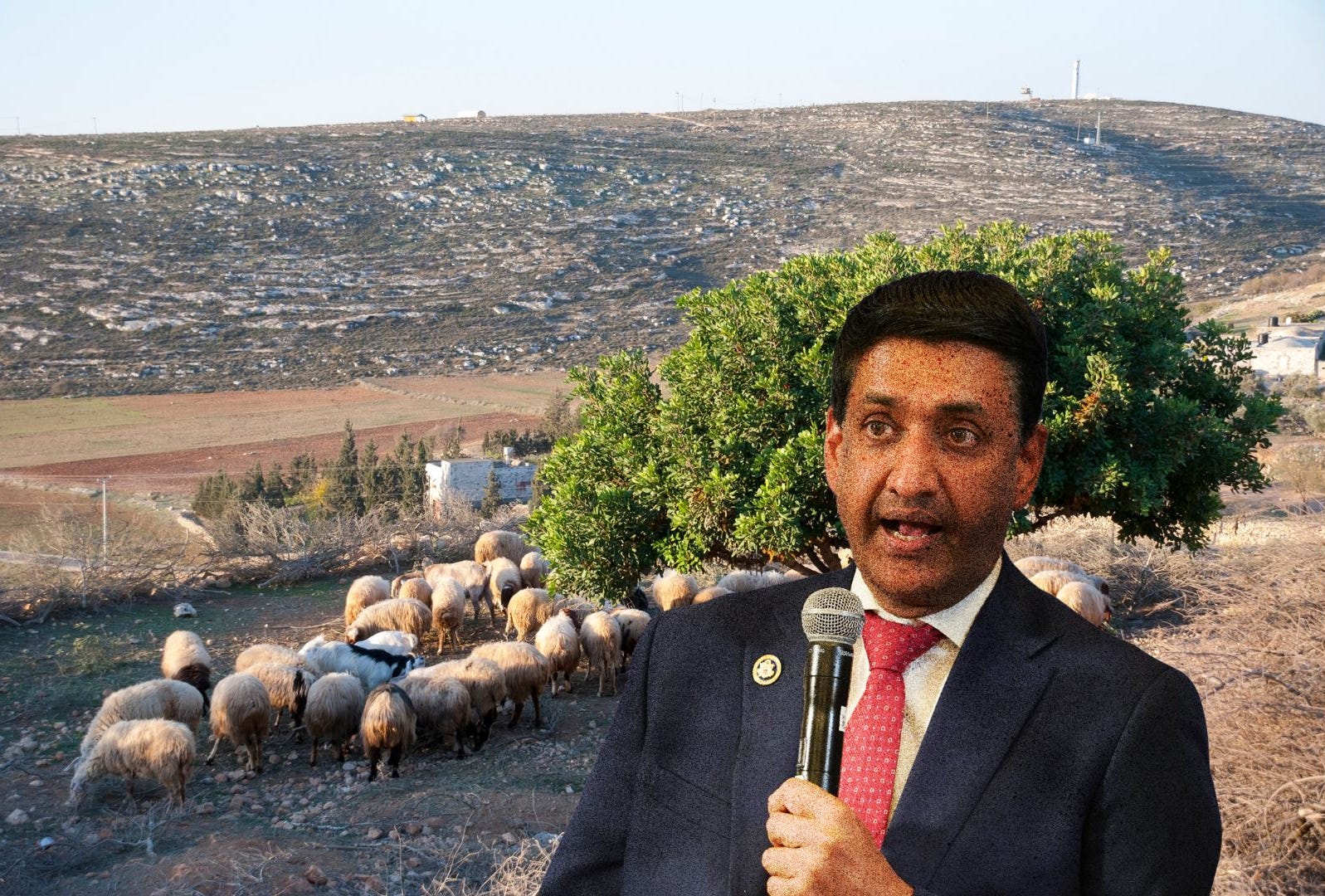
Last Wednesday, Representative Ro Khanna of California was stopped on a West Bank road by armed Israeli settlers. Men with American rifles blocked his van near Khirbet Zanuta, a Palestinian village whose residents settlers had already expelled, and held his group for over an hour. When soldiers arrived, according to Khanna, they sided with the settlers and kept his group blocked; the IDF says its troops dispersed the settlers and reopened the road, denies detaining anyone, and notes Khanna never coordinated the visit. Only after police arrived was the road cleared.
Khanna is considering a presidential run. He came on a tour organized by Palestinians, returned to California, and released a video. That video is why I am writing. Almost everything in it is true, which is exactly why it demands attention and anger, though not for the reason he wants.

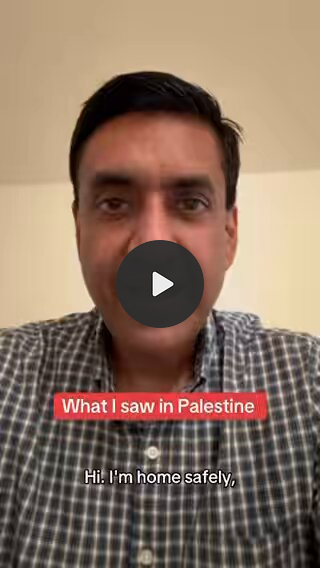
Nothing Khanna filmed is invented. The impunity behind it is real. The settlers around Khirbet Zanuta include Yinon Levi, who shot and killed Awdah Hathaleen, a Palestinian activist, in a nearby village last year, a killing Hathaleen filmed as it happened, and was released within days.
What he invented was himself. “Not as a politician,” he says to the camera, “just as a person.” But this is a man who returned from a campaign trip his campaign paid for, more resolved to run, and booked to tell it all to Hasan Piker on Monday. He arrived without announcing himself, told the embassy the trip was private, did not coordinate with Israeli officials, and only appeared publicly once he was back home with the footage. Someone truly moved by what they saw would not turn it into a communications strategy. Palestinian organizers planned the trip to show him a specific perspective, and they succeeded. What they left off the schedule is revealing. According to the Israeli organizers, he was offered a meeting with freed hostages and declined. He was also offered a visit to the Druze of the Golan and a briefing on how aid gets into Gaza, and he declined both. That shows what he really came for.
He did not have to stage being detained. The West Bank gives that story to anyone who looks for it. That fact is an indictment of this Israeli government and Bezalel Smotrich, and I include myself in that criticism. But searching for the truth is not the same as collecting a story. The real difference is in what someone chooses not to see. In Khanna’s version, every Israeli is a villain: a settler, four soldiers, more settlers, the IDF, settlers who urinate and throw acid from rooftops, guards who beat a man for not speaking Hebrew. No Israeli is shown as a real person. A real person would have made the story more complicated and less convenient.
The Palestinians do not come off any better, even though Khanna’s video tries to show sympathy. In his version of the West Bank, not a single Palestinian makes a choice. They are only shown as victims, there to be pitied and filmed. A people with their own politics, decisions, and debates over decades are reduced to objects, only there to suffer. He erases them just as much as he erases the settlers, only in the opposite way. Neither group is shown as real people. Both are just props in his story.
There are Israelis Khanna could have shown but chose not to. For example, the mother who has spent almost two years not knowing which of her child’s bones are in a tunnel. Or the reservist who stands up to settlers and is called a traitor by his own government for it. The half of the country that has been in the streets against this coalition. Khanna built a trip to make sure he was never in a room with any of them. Then he claimed ideology had nothing to do with what he saw. The itinerary was built to show him one side, and he left with exactly the story he came for.
Then Khanna flew back to California. Leaving was always an option for him, but not for anyone else in his video. He could come, get his footage, and leave when he wanted. The father he mentions in his video keeps his dead son’s room and cannot leave Huwara; he is already home. Khanna passed through, filmed him, and left.
That same afternoon, a two-hour drive north, Rahm Emanuel stood at Tel Aviv University and said tougher things than anything on Khanna’s video, and he said them to the people who could actually respond. Emanuel told a room full of Israelis that their own government was “complicit in the horrors now being inflicted on innocent families in the West Bank.”
He said a true friend is someone who tells the truth “even when it’s painful,” and he called out extremists on both sides—the Greater Israel dream and the river-to-the-sea chant—right to the faces of those involved. Emanuel is also considering a 2028 run. He made his case in front of the people he was criticizing. Khanna made sure those people were far away before he said anything. Emanuel’s father ran guns for the Irgun; Emanuel criticizes Israel as someone who means to remain bound to it. Khanna criticizes it as someone who made sure he would be gone before anyone could answer.
I have spent years doing what Emanuel did from that stage from within Israel: trying to tell this country hard truths, in its own language, because I live here and want it to survive. I have to face what those years have achieved. Huwara still burned. An outpost I stood in was legalized anyway. Ben Gvir passed his death penalty for Palestinians only. The hard truth from someone who stays may be the easiest for a government to ignore, because it comes with the promise that I am not leaving, and I am not. That’s the possibility Khanna’s coldness makes me face. Criticism that costs the critic nothing is easy to dismiss. Criticism that costs everything is easy to wait out. Neither is the answer. I only know mine hasn’t worked yet.
Two Americans, one Wednesday, one country. This is the choice facing the Democratic Party, and it’s clear on the ground. Emanuel stands for the operator wing—those who stay close to Israel and speak hard truths because they want the alliance to last. Khanna stands for the movement wing, which is younger, louder, and speaks to people who question the alliance itself. This week made the choice obvious. I’m not neutral. My position depends on Khanna’s side losing, and I’d rather say that openly than pretend to be detached, as he does.
Someone is missing from Khanna’s video, and increasingly from his party: the Jew who belongs to this land and feels shame for what is done in its name. The one who can call Huwara a pogrom and mean it, but still wants the alliance that could give both peoples a better future. Khanna’s frame erases that Jew just as much as it erases the decent Israeli, for the same reason. He makes the story more complicated. He does not fit into a planned itinerary or a simple narrative.
No one in Khanna's West Bank is fully real to him. Not the settlers he needs as villains, not the Palestinians he needs as victims, not the ordinary Israelis who would have made the story more complex. Everyone is just a tool. And the tour didn't end at the airport. He flew home in time for Sunday's Meet the Press, where he went on opposite Netanyahu and called the IDF liars, booked Hasan Piker for the next day, and, of course, sent out a fundraising email. What looks like emotion is really arrangement, and it all points back to him. Welcome to Ro Khanna's West Bank Theater.
You're undoubtedly correct. But the problem for the US is that the Rahm Emmanuel's weren't willing to say the things they say now in public, or push for consequences for what the settlers have been doing with Israeli government backing for 40 years, until the break with Israel crowd began to gain power. They loved Israel so much , that when the time for consequences for Impunity and violence came, they couldn't pull the trigger and were easily persuaded to write sternly worded letters instead. I had an argument with someone who I thought was critiquing Emmanuel's Speech from the right who said "He should have given this speech 20 years ago! He had more power then and this would be easier." And I had to agree.
That's why I'm heartened by this political theater. Ultimately I want the people who want the Israeli relationship to continue to be victorious. But we're only going to win if the people who don't want this have actual power and influence. If Americans are outraged at what's going on in the West Bank and Gaza. It gives all the people who know better but haven't been willing to act the space to act and the urgency to not kick the can down the road but to confront the Occupation squarely.
A couple years ago I stood with concerned Americans Jews protesting Smotrich’ visit to Washington. But as a former colleague at New Israel Fund said to me quietly, where we these people when we were trying to end decades of occupation?
Rahm had plenty of chances to see what we saw, and read reports from B’Tselem et al, a very long time ago. The new converts to “gee, its apartheid” are welcome even if they are only halfway honest because Israel has forced them to be.
I joined a few demonstrations against the judicial overhaul and noticed how they were “saving Israeli democracy “ with no mention of millions who have never had democratic rights. The liberal Zionism I once worked for has been an oxymoron at least since the nation-state bill passed in 2018.
Khanna had his story, yes, like every American bigwig who only sees the burnt out kibbutzim in the Gaza envelope and returns with just that (terrible) part of the story.