


It's been a very eventful day in Israeli politics. A quick departure from my usual format — I'll be posting periodic updates when the news warrants it. This is one of those moments.
The Big Picture
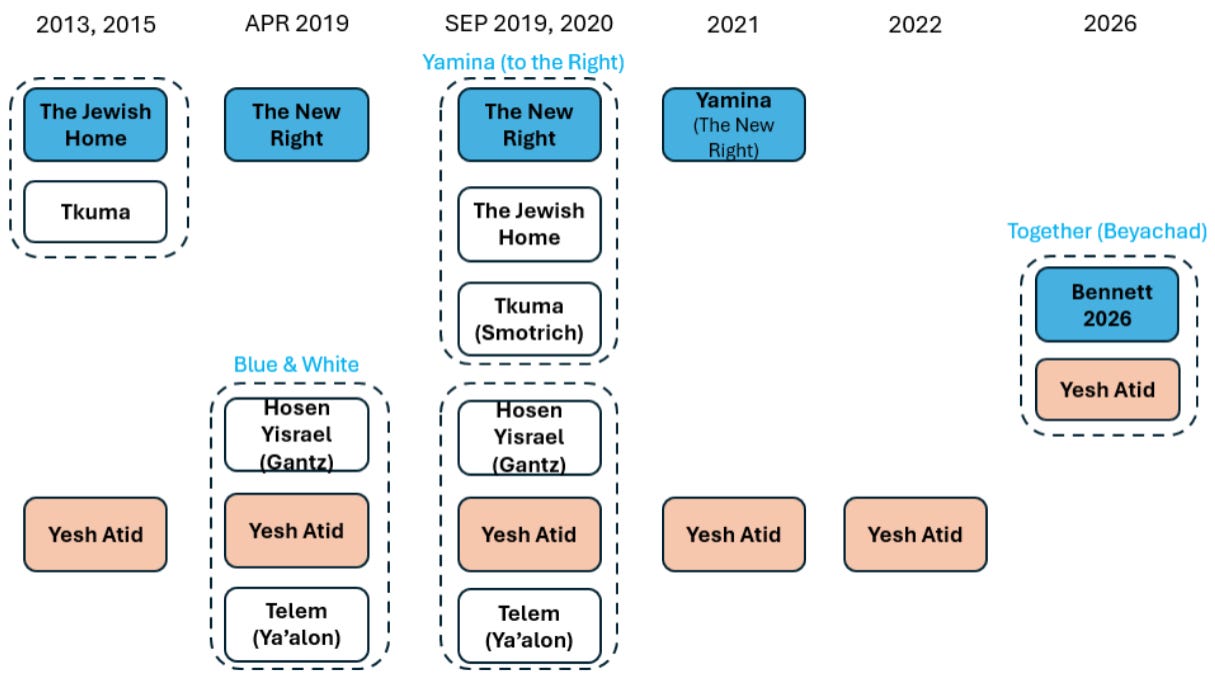
Israeli politics is in active realignment. No election date has been set, but the opposition map is already being redrawn — parties dissolving and new formations taking shape. Today is evidence of how fast it’s moving.
What Happened
Kachol Lavan (Benny Gantz’s centrist party) is effectively over. MKs Eitan Ginzburg and Hili Tropper are among those leaving. Gantz has not yet resigned, but the direction is clear.
Yoram Cohen, the former director of the Shin Bet, joined Yashar — Gadi Eisenkot’s party — the latest signal that figures from Israel’s security establishment are moving into the opposition political lane.
Rumors are circulating of a merger between Avigdor Lieberman and Gadi Eisenkot. If it materializes, it wouldn’t just create another centrist-security lane — it would position itself as a direct rival to Beyachad (the newly formed party of Naftali Bennett and Yair Lapid) for the role of leading the next government.
Netanyahu has already launched an aggressive campaign targeting Beyachad, warning voters that a ballot for Bennett and Lapid will land them with Mansour Abbas and Ahmed Tibi in the coalition.
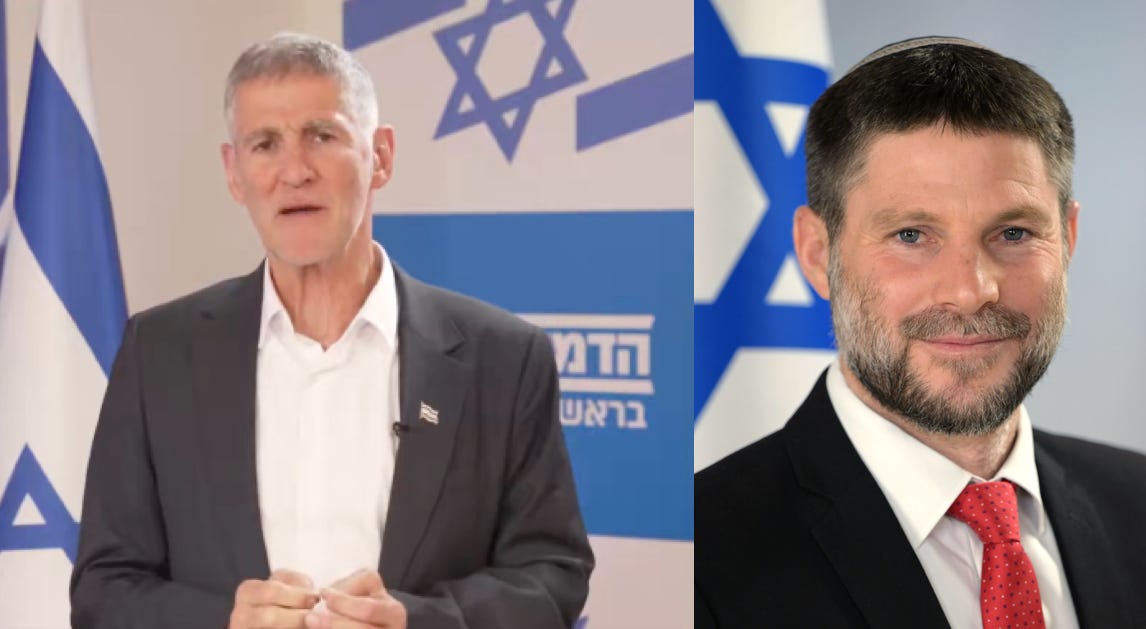
Meanwhile, Finance Minister Bezalel Smotrich told Radio 103FM that a government that included Mansour Abbas was worse than the October 7 massacre. Within hours, Yair Golan of the Democrats responded by calling on anti-Netanyahu bloc leaders to declare Abbas a legitimate coalition partner in the next government.
Why It Matters
Kachol Lavan’s collapse won’t move many votes — Gantz has been polling under the threshold — but it closes a chapter on the formation that once defined the anti-Netanyahu opposition, and signals that the remaining centrist energy is consolidating elsewhere. The more consequential development is the Smotrich-Golan exchange.
Smotrich has cynically forced a question onto the table that parties have answered before — but never with this much weight. After Golan’s direct challenge, every new formation will have to answer it again, on the record, before the campaign even begins: will you govern with Arab parties or won’t you? That single fault line may do more to define the next coalition than any poll number. So far, every Zionist party except Golan’s Democrats has said no — but reaching 61 seats (the threshold for a governing majority) without the Arab parties will not be easy.
It’s also a smart political move from Golan. By issuing the challenge directly, he differentiates himself from a crowded field that has given the same answer for months without being challenged on it. Whether it pays off electorally is another matter — but he now owns the issue. Lapid’s partnership with Bennett makes it harder for Beyachad to answer the same way.
What To Watch
Whether Beyachad can keep momentum and whether Lapid’s partnership with Bennett shifts his position on Mansour Abbas specifically. Whether Lieberman merges with Yashar and where that formation positions itself. With the addition of Yoram Cohen and a potential Lieberman merger, can they credibly challenge Beyachad?
And whether this realignment actually benefits Golan — with Lapid no longer competing in the center-left lane, and a Lieberman-Eisenkot alliance positioned in the crowded center-right, Golan may find himself with more room than before.
And the question that ties all of it together: does this realignment actually get the Zionist opposition closer to 61 seats — or does it just rearrange the same votes into different buckets?
Bennett-Lapid is a merger of weakness and limited prospects.
https://substack.com/@thinktorah/note/c-249976470