


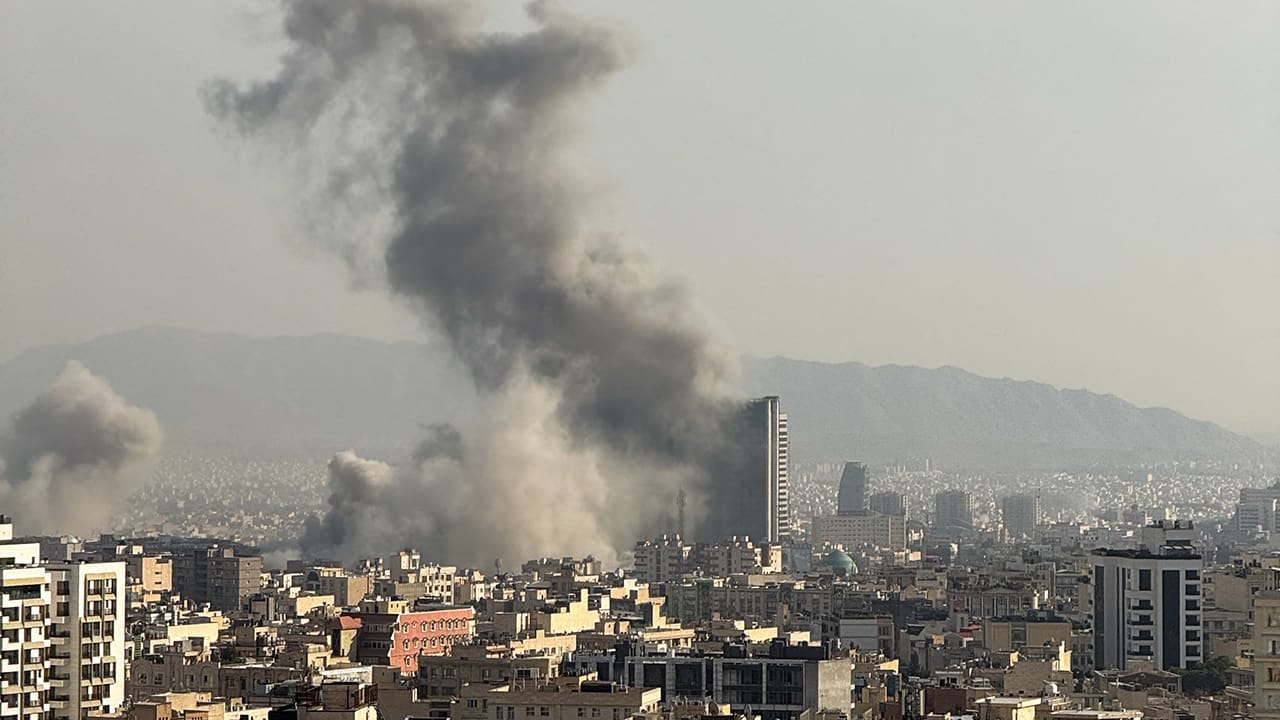
For almost 50 years, the Islamic Republic believed it could outlast anything. Presidents, sanctions, assassinations, protests. It was right — until February 28.
On Saturday, the United States and Israel killed Ayatollah Ali Khamenei and decapitated the IRGC’s senior leadership in a single coordinated operation. For the first time since 1979, the regime is mortal.
The Miscalculation
Iran had a theory of the case. It had survived the Iran-Iraq war, the Green Movement, crippling sanctions, the assassination of Qasem Soleimani, and the June 2025 Israeli and US strikes on its nuclear program. After that 12-day war, I wrote that Trump’s ceasefire left a lot of unanswered questions: about Iran’s intentions, about whether the ceasefire would hold, and about what the regime would do with the time it had bought. We’re getting the answers now. I wrote then that the ceasefire felt more like a pause than a resolution. I wasn’t wrong — I just didn’t know how short the pause would be.
Every time the world pushed, the regime bent but didn’t break. Every time an American president threatened, the threats gave way to diplomacy. Iran assumed Trump would be no different.
What they missed is that Trump came in genuinely open to a deal. He reached out. He gave Iran an offramp. The Oman talks were real. Steve Witkoff and Jared Kushner were at the table. Oman’s foreign minister said on Friday that peace was “within reach” — Iran had even agreed during the talks never to stockpile enriched uranium. Hours later, the bombs fell.
Iran treated the negotiations the way it always does: as a delay tactic, a way to string along another American president until the moment passed. Trump saw it. And he acted.
They forgot — or chose to ignore — that this was the same man who killed Soleimani without a second thought. That miscalculation may have cost the regime everything.
A Regime That Earned Its End
On December 28, Iranians took to the streets. By the time the crackdown ended, more than 6,800 of them were dead. Not soldiers. Shopkeepers, students, mothers. Khamenei called them “rioters and terrorists” and ordered his forces to crush them by any means necessary. The internet was cut to hide the evidence. This is the government the United States and Israel just decapitated.
And none of this was new. Since 1979, the regime’s foreign policy has been the systematic export of violence. Hezbollah in the early 1980s. Decades of funding Hamas. Arming the Houthis. Building militias across Iraq and Syria. October 7 didn’t happen in a vacuum. It was the product of almost 50 years of deliberate Iranian investment in terror.
The regime didn’t stumble into this moment. It marched toward it.
Iran’s Final Gift to Its Own Isolation
Even in its retaliation, Iran couldn’t stop making enemies.
After the strikes, Tehran launched missiles and drones at Bahrain, Qatar, Kuwait, the UAE, Iraq, and Cyprus. Six Muslim-majority countries, plus an EU member, hit in a just 48 hours. Iran struck Saudi Aramco’s Ras Tanura refinery, shutting it down. It hit Qatar’s energy facilities at Ras Laffan. It struck Dubai International Airport and the Fairmont The Palm hotel. It hit the US Embassy in Riyadh and the US Embassy compound in Kuwait. A bomb drone struck an oil tanker in the Gulf of Oman, killing a mariner. And on Monday, Iran officially closed the Strait of Hormuz, through which roughly a fifth of the world’s daily oil supply flows. Brent crude is up around 9%. Global markets are rattled.
Then there’s Hezbollah. After more than a year of quiet following the 2024 ceasefire, the Lebanese militant group fired rockets into northern Israel claiming revenge for Khamenei’s killing. The IDF called it an official declaration of war. The conflict has now spread beyond Iran’s borders.
Notice what Iran has not done: built a coalition. Not a single Muslim-majority government has come to its defense. Saudi Arabia condemned the attacks on its own territory. Qatar closed its airspace. The only country in the Gulf that Iran has not struck is Oman — the one country that was actively trying to broker peace on Iran’s behalf.
You can’t bomb your Muslim neighbors, close the world’s most important oil route, and drag Lebanon back into war while claiming to speak for the Muslim world. Whatever sympathy Iran might have found in the Arab world, already thin after January’s massacres, is gone.
What Now?
Khamenei is dead. Senior IRGC commanders are gone. Nuclear facilities at Natanz, Fordow, and Isfahan have been struck. In a sign of how fast things are unraveling, Kuwait mistakenly shot down three American F-15Es during Iranian attacks — all six crew ejected safely. Iranians are celebrating in the streets of Tehran, Shiraz, and Isfahan. In southern Iran, a monument to Ayatollah Khomeini was toppled by a crowd.
But the regime Khamenei built was designed to survive exactly this. A three-person leadership council — President Pezeshkian, judiciary chief Mohseni Ejei, and jurist Ayatollah Arafi — has already been formed to run the country. Ali Larijani, sanctioned by the US Treasury for orchestrating the January massacres, is positioning himself as a potential permanent successor. If that’s who fills the vacuum, the regime doesn’t transform. It hardens.
There’s one crack worth watching. Iran’s own foreign ministry has acknowledged that the military has lost control of some units. That’s not collapse — but it’s the kind of fracture that, if it spreads, changes everything.
Trump says the operation is “substantially ahead of schedule” and warns the “big wave” is yet to come. He won’t rule out US troops on the ground. Trump is calling for regime change. Iranians in the streets want it. The question is whether wanting something and making it happen are the same thing.
Iran has crushed protest movements before. 2009. 2019. 2022. January 2026. Each time, the IRGC held together. But the conditions today are different. A decapitated leadership. A nuclear program in ruins. A population that just watched tens of thousands of its people get massacred. A US president who seems prepared to keep going. And a military that may already be losing cohesion.
Regime change requires more than conditions, though. It requires an alternative — a credible successor structure that Iranians can rally around. That doesn’t exist yet. Without it, the IRGC consolidates power, installs a hardliner, and we’re back where we started but angrier.
Three paths forward, none of them clean.
The worst and thankfully, least likely: a hardline successor concludes that going nuclear, faster and more covertly, is the only way to survive. The threat doesn’t end. It gets worse.
The second: a negotiated settlement. No enrichment, no rebuilding, real verification. But any deal that leaves the IRGC intact in many ways resets the clock. We’ve been down that road.
The third: actual collapse. The IRGC fractures, the protests return, and the Islamic Republic ends not with a dramatic final moment but with an unraveling that suddenly accelerates. That’s the only outcome that actually solves the problem — a genuine end to the Islamic Republic, and the freedom Iranians have been demanding and dying for.
The strikes are the easy part. I fear that both the US and Israel’s hope of regime change is more wishful thinking than anything tangible, and relies on many factors that are currently out of the US and Israel’s control.
Final Thought
The Islamic Republic spent almost 50 years making this moment inevitable. It built terror networks across the Middle East. It massacred its own people. It pursued nuclear leverage as a tool of intimidation. And in its final act, it bombed the Muslim countries it once claimed to lead.
But don’t confuse the beginning of the end with the end. The IRGC is not the Venezuelan military. Iran is a country of 90 million people with 46 years of loyalty structures, patronage networks, and repressive machinery built specifically to survive moments like this. Regime change is possible. It just won’t happen on Trump’s four-to-five-week timeline — and anyone telling you otherwise hasn’t been paying attention.
The Iranian people deserve to be free. Whether they get there depends on what comes after the bombs stop falling. That’s the harder question. And nobody has answered it yet.