


On Friday, in the olive groves outside the West Bank village of Abu Falah, extremist settlers beat a Washington Post photojournalist who had come to photograph Palestinian farmers at harvest. American Heidi Levine has covered conflicts around the world for years. She was wearing a flak jacket and a helmet, clearly identified as a journalist.
Five days earlier, 60 Minutes aired Lesley Stahl’s report from the West Bank, which showed settlers attacking Palestinians on camera, and one settler asked her whether she was “in with Hamas.”
The settlers who attacked Heidi Levine didn’t even ask.
From her hospital bed in Ramallah, Levine said that without her flak jacket and helmet she probably would not be here, because the men “just kept kicking me and kicking me.”
Eyewitnesses say about eighty extremist settlers, many of them masked, came down the hill. Army jeeps arrived while the attack was still ongoing, they say, and the soldiers fired tear gas toward the Palestinians.
The Office of the Prime Minister sought to cast doubt on the whole affair, even though it’s been documented with video evidence. According to Netanyahu’s office, Levine was “allegedly assaulted” (emphasis mine). It also claimed that some 200 “Arabs and far-left activists” had confronted about 40 Israeli youths.
We’ve seen this pattern before. In July, a Palestinian at the village of Tell killed a settler security officer, Benayahu Mellet, and an army major. Within days, settlers burned two mosques, a home and cars, and scrawled the words “Benayahu’s Revenge” on the wall of the mosque in Qusra.
The army said it arrived too late to catch anyone. Then, it raided Tell, took some 70 Palestinians in for questioning, and sealed the homes of two Palestinians ahead of demolition. The state moved against the village within hours and against the men who burned the mosques not at all.
Two things are true here, and I have said both repeatedly. The first is that international focus is out of proportion, and the violent are a minority, both among settlers and certainly among Israelis writ large. The second is that even a small group can cause a lot of damage, and we must confront settler violence.
The violent settlers are Israelis. They are also Jews. They are armed and funded by a state we live in and pay for. Settler violence is one of Israel’s few crises that the government could end next week if we wanted to, without having to ask Washington or account for what Iran and its proxies will do. The state just has to enforce its own laws.
Israel’s own security establishment recorded 660 incidents of Jewish nationalist crime in the first half of this year, up 50 percent from the same months of 2025. Even Mike Huckabee, the pro-settler US ambassador, has repeatedly called violent settlers terrorists. And yet, this government has done almost nothing to stop it, and parts of it have even enabled it. But the signs were there before this government took power.
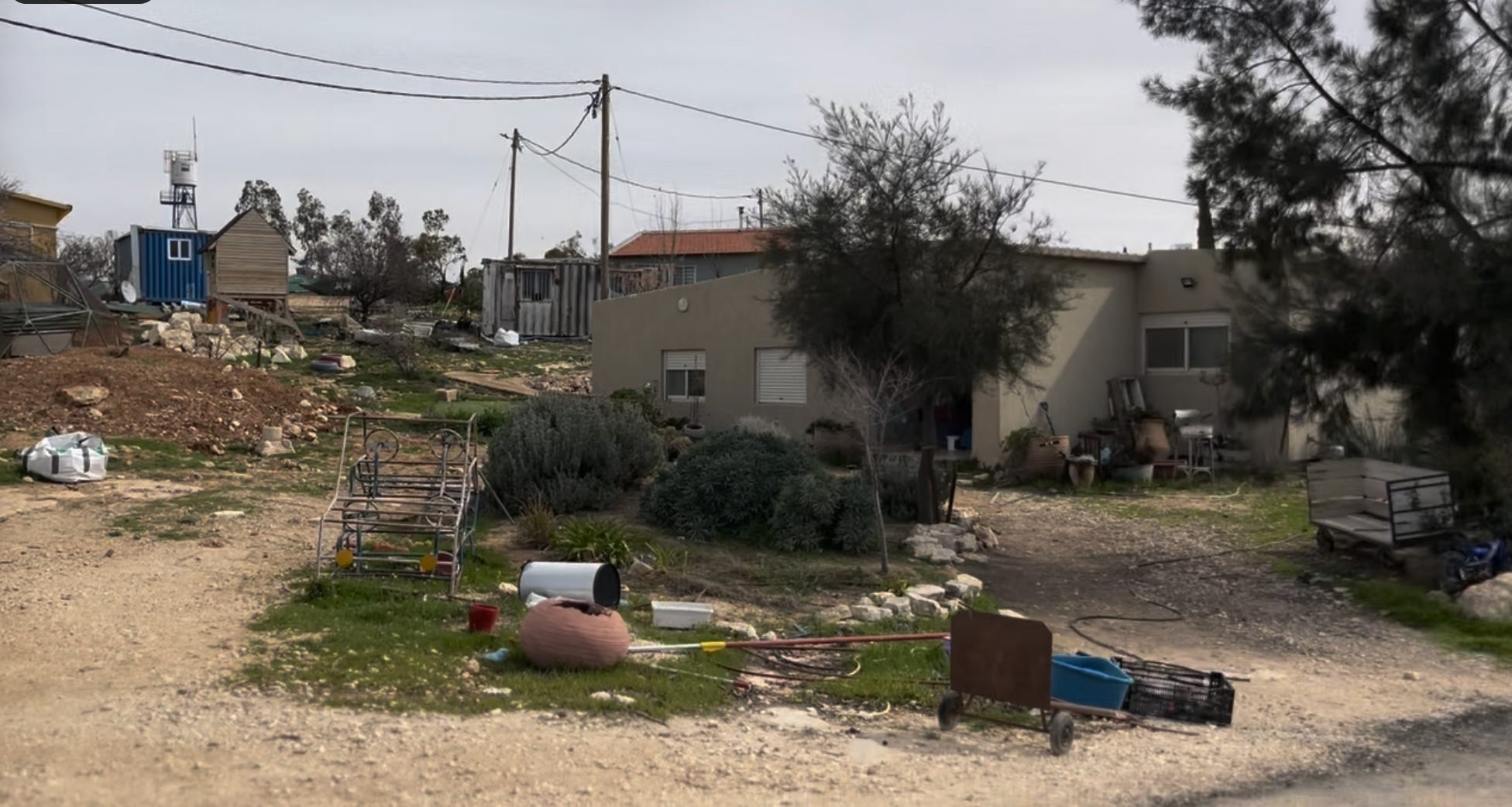
Almost five years ago, before this government was in power, I visited the West Bank with a delegation of former high-ranking IDF commanders and prominent liberal Zionists—American Jews who’d given millions to Israel. We went to an outpost in the South Hebron Hills called Avigayil to hear from the people living there. The community’s security coordinator met us along with a group of teenagers in tzitzit carrying automatic rifles. At one point, those rifles were pointed at us.
Young men with their fringes showing and automatic weapons pointed at Jews who had come in good faith made me realize, for a few seconds, that these boys did not see us as fellow Jews who simply disagreed with them.
For years I thought settler violence was exaggerated, a few bad actors blown out of proportion by critics of Israel. That belief disappeared in a moment, and I realized how wrong I’d been: if this is how they treat us, with our donations, our generals, and our shared prayers, what might they do to the Palestinians living down the hill? And today they have a government that largely has their back.
In late September, more than 100 settlers rioted in Jalud and blocked soldiers from escorting a Palestinian family back to the home they were driven from, even after the High Court ordered their safe return. They also lightly wounded three Border Police officers. The army said the mission was not completed.
When we visited, Avigayil was an illegal outpost. In 2023, this government legalized the outpost as a settlement through the Civil Administration, which Bezalel Smotrich largely runs.
No shots were fired, and no one ultimately touched us, but we were told to turn around, and it was not the gentle way you guide a guest who has wandered in by mistake. One of the former colonels flashed his army ID to the settlers, and they were not impressed. IDF rank barely protected us that day, and being an American journalist did not protect Heidi Levine.
Eli, this is a disturbing and important essay. Your account of having rifles pointed at you by Jewish teenagers is particularly chilling.
I recently read Dory Benami’s essay about the Hilltop Youth, and it challenged something in my own thinking. I’ve tended to regard these young men simply as violent thugs. But Benami describes another dimension: troubled adolescents, some barely teenagers, who have struggled at school or home and find belonging, purpose, and responsibility tending sheep on isolated hilltop farms.
It struck me how closely some of the dynamics resemble gang recruitment: alienation, belonging, territorial identity, peer approval, and escalating violence.
That doesn’t excuse a single attack on a Palestinian. But it raises another troubling question: to what extent are vulnerable Jewish children being exploited by adults pursuing ideological and territorial ambitions?
Your essay brings that question into sharper focus. When the state fails to enforce its laws, and then legitimizes outposts established through this process, it risks rewarding the very behavior it should be preventing.
And beyond policing lies the larger question of what continued settlement expansion means for Palestinian self-determination. We cannot preserve that possibility in rhetoric while steadily closing it on the ground.
Understanding how these boys become radicalized matters. So does asking who benefits from their radicalization.
Thank you for this piece.